A Practical Guide to Choosing Natural Home Cleaning Products
A rigorous, evidence-based approach to selecting natural, eco-friendly cleaning options for a healthier home. We weigh ingredients, performance, cost, and environmental impact without endorsing any single brand.
Published September 27, 2026
Overview
The modern household stands at the crossroads of science and sentiment: we want products that are gentle on our surfaces and gentler on the planet. The aim of this guide is not to evangelize a particular product line or to turn every cupboard into a showroom of green branding. Instead, it offers a disciplined framework—grounded in ingredient safety, performance, and lifecycle analysis—that helps readers make informed decisions about natural cleaning options.
In the spirit of gogonatural.com, we refuse to reduce complexity to slogans. Natural cleaning is not a single substance, but a spectrum: plant-based cleaners, mineral-based abrasives, enzyme accelerants, and mechanical methods all play a role. The goal is a healthful home that respects people, pets, and the environment.
A Neutral Evaluation Framework
The core of any decision about natural cleaners is a simple, repeatable framework. We assess four axes: ingredients (safety and efficacy), performance (stain removal, grease-cutting, disinfection where appropriate), cost (per-use and per-ounce), and environmental impact (production, packaging, and end-of-life disposal). The framework below is designed to be practical, non-technical, and adaptable to a broad range of products.
- Ingredients and safety: Are the ingredients clearly listed? Are there known allergens or sensitizers? Do the ingredients have independent safety assessments or certifications?
- Performance: Does the product handle common tasks (kitchen grease, bathroom mildew, glass streaks) without requiring repeated applications?
- Cost and yield: What is the price per use? How concentrated is the formulation? Is a smaller, concentrated bottle more economical over time?
- Environmental footprint: Are ingredients renewable? Is packaging recyclable or reusable? Is the product biodegradable?
Key Myths About “Natural” vs. “Synthetic” Cleaners
The domain of natural cleaners is rife with assumptions that deserve scrutiny. Three common myths deserve particular attention:
- Myth 1: “Natural” always means safer or better. Reality: Safety depends on concentration, exposure, and context. Some natural ingredients can be irritants or reactive; others are benign but ineffective if misused.
- Myth 2: “Synthetic” equals harmful. Reality: Many synthetic cleaners are highly effective and regulated; the concern lies in misuse, formulation details, and environmental persistence—not a blanket indictment of synthetics.
- Myth 3: Green branding guarantees sustainability. Reality: Branding can obscure lifecycle impacts; true sustainability requires transparency about sourcing, manufacturing, packaging, and end-of-life.
Ingredient Lists: A Practical Quick-Scan
When evaluating ingredient lists, a few straightforward criteria can help you separate substance from spectacle:
- Avoid ambiguous terms: “Green,” “natural,” or “eco” are marketing terms unless tied to credible certifications.
- Look for explicit components: Surfactants, solvents, chelating agents, antimicrobial additives, and pH modifiers. If you cannot recognize the ingredient, research it or choose products with clearer labeling.
- Check for safety data: Access to independent safety assessments (e.g., EPA Safer Choice, CRI, or soil-based certifications) is a plus.
- Beware fragrance claims: Fragrances can be allergenic; opt for products that disclose fragrance components or offer fragrance-free variants.
A Neutral Decision-Making Template
To compare products without bias, use a simple decision-tree approach. The template below can be filled out with any candidate product family—from All-Natural Orthopedic Neck Pillows to towels or linens in our world of natural home goods, even though we’re focused on cleaning products here. The aim is to maintain neutrality and emphasize evidence.
- Step 1: Define your cleaning tasks. What surfaces and soils need to be addressed?
- Step 2: List candidate formulations. E.g., plant-based degreasers, mild acidic cleaners, baking-soda-based abrasives, or enzyme cleaners.
- Step 3: Score each on ingredients, performance, cost, and environment. Tie-breakers reveal preferred options.
- Step 4: Test in a small area. Always perform a patch test and monitor for adverse reactions.
The goal is not perfection but practical improvement: to reduce exposure to harsh additives, minimize packaging waste, and maintain surface integrity.
A Short Historical Lens: Three Time-Traveling Figures
Our conversation about cleanliness intersects with epochs of science, homemaking, and environmental awareness. Consider three figures who illuminate the evolution of thought around purification, materials, and living spaces:
-
🧪
I. Louis Pasteur (1822–1895)
A molecular lens on household life. Pasteur’s germ theory reframed cleaning from anecdotal fuss to a science of microbes. His insistence on sterilization, filtration, and microbe control nudged consumer products toward safer formulations. In the context of natural cleaners, Pasteur’s spirit invites us to question containment, source materials, and consistent heating or processing to reduce risk.
-
🌿
II. Rachel Carson (1907–1964)
The author of Silent Spring broadened the frame of cleaning from private home tasks to public health and environmental accountability. Her work seeded a cultural shift toward toxicity awareness and lifecycle thinking. In a natural-cleaning context, Carson’s legacy is a reminder to scrutinize the broader ecological footprint of cleaning agents, including production, packaging, and downstream effects.
-
♻️
III. Jane Goodall (1934–
A modern exemplar of applied science and environmental stewardship. Goodall’s work demonstrates how careful observation and humility can inform change at scale. In the natural cleaning conversation, she embodies a discipline of monitoring outcomes, engaging communities, and valuing evidence over hype—a posture essential to any credible natural-living initiative.
Product Spotlight: All-Natural Orthopedic Neck Pillow
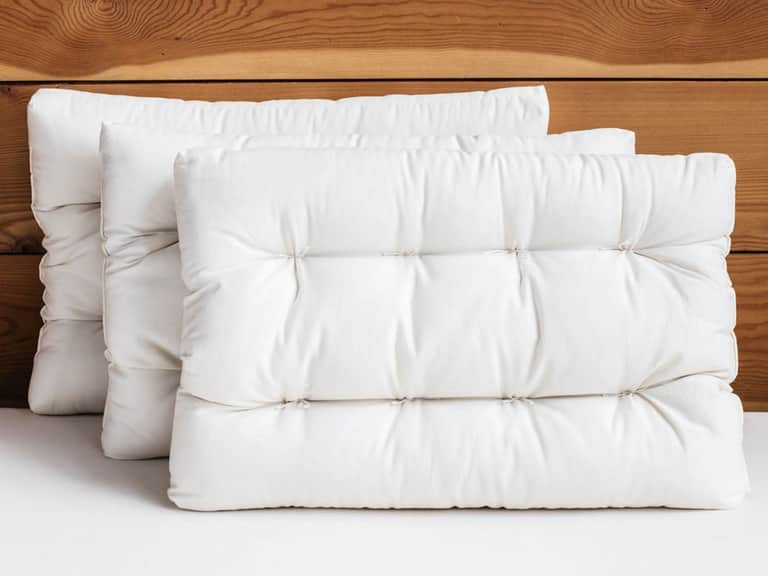
While the main focus here is cleaning, a parallel product in the gogonatural ecosystem—All-Natural Orthopedic Neck Pillow—offers a compact illustration of the same design-minded thinking. It uses 100% organic cotton and Premium Eco Wool for temperature regulation and dust-mite resistance, with dual edge bolsters for cervical support. Its materials story traces through India, Pakistan, the United States, and New Zealand, offering a case study in transparent, natural sourcing.
This pillow is a reminder that natural living is a network: textiles, fibers, and processing methods all contribute to the final experience. For cleaning enthusiasts, it underscores the value of ingredient transparency and lifecycle integrity—principles that translate across product categories.
In a broader sense, it demonstrates how a natural-brand philosophy can extend beyond one category (bedding) into everyday living—consistent with the Direction A identity described for gogonatural.com: an educational hub that supports practical, evidence-based decision-making.
All-Natural Orthopedic Neck Pillow
Material: 100% organic cotton cover; Premium Eco Wool fill. Sizing: 18 x 24 inches. Care: spot clean; removable cover is machine washable in cold water.
Note: Availability and pricing vary by retailer.
Initial Content Slate for gogonatural.com
Beginner’s guide to going natural
A practical, step-by-step primer for readers starting natural living, with emphasis on accessible ingredients, simple routines, and measurable improvements in indoor air quality and surface safety.
Understanding natural cleaning labels
Decoding ingredient lists, certifications, and claims; guidance on when “natural” is meaningful and when it is branding.
Myth-busting: natural vs. synthetic
Evidence-based analysis of common beliefs, with clear distinctions between safety, efficacy, and environmental impact.
Lifecycle thinking for cleaners
Packaging, transport, and end-of-life considerations; strategies to minimize waste and energy use.
Conclusion: Toward a Thoughtful Natural Home
The pursuit of natural cleaning is not a single destination but a continuous practice of inquiry, measurement, and adaptation. Gogonatural.com, guided by the educational and exploratory spirit of this article, aspires to be a steady companion for readers who want clarity in a crowded marketplace and a path toward healthier living. By embracing a framework that foregrounds evidence, transparency, and respect for the environment, we can build a home that feels as good as it is good for us.